Tires get less thought than almost anything else on a bike, even though they're the only thing touching the road.
Rider forums and review sections are full of tire complaints, and the same few problems keep coming up: old stock sold as new, tires that wear out early, poor grip in the wet, defects that show up after mounting, and installs that go wrong. This won't tell you which brand to buy. It's a list of things to check so a new tire doesn't turn into a problem.
Start With the Right Size and Ratings
Before any of the checks below, make sure you're shopping for the right tire in the first place. Three things come straight from your owner's manual or the placard on the bike:
- Size. Front and rear are usually different. If the numbers on the sidewall look like code, here's how motorcycle tire sizes work.
- Load index. It has to cover the bike, you, a passenger and luggage. More on the motorcycle tire load index.
- Speed rating. Don't go below what the manufacturer specifies. See motorcycle tire speed ratings explained.
Many riders keep the front and rear from the same tire range. If you're thinking of mixing, check what the tire maker says first.
1. Check the Date Code Before It Goes On the Rim
Rubber ages on the shelf. A tire can look brand new, with the mold whiskers still on, and still be years old. Buyers on rider forums regularly report receiving "new" tires that turned out to be made years before they bought them, especially from third-party marketplace sellers.
How to Read a Motorcycle Tire Date Code
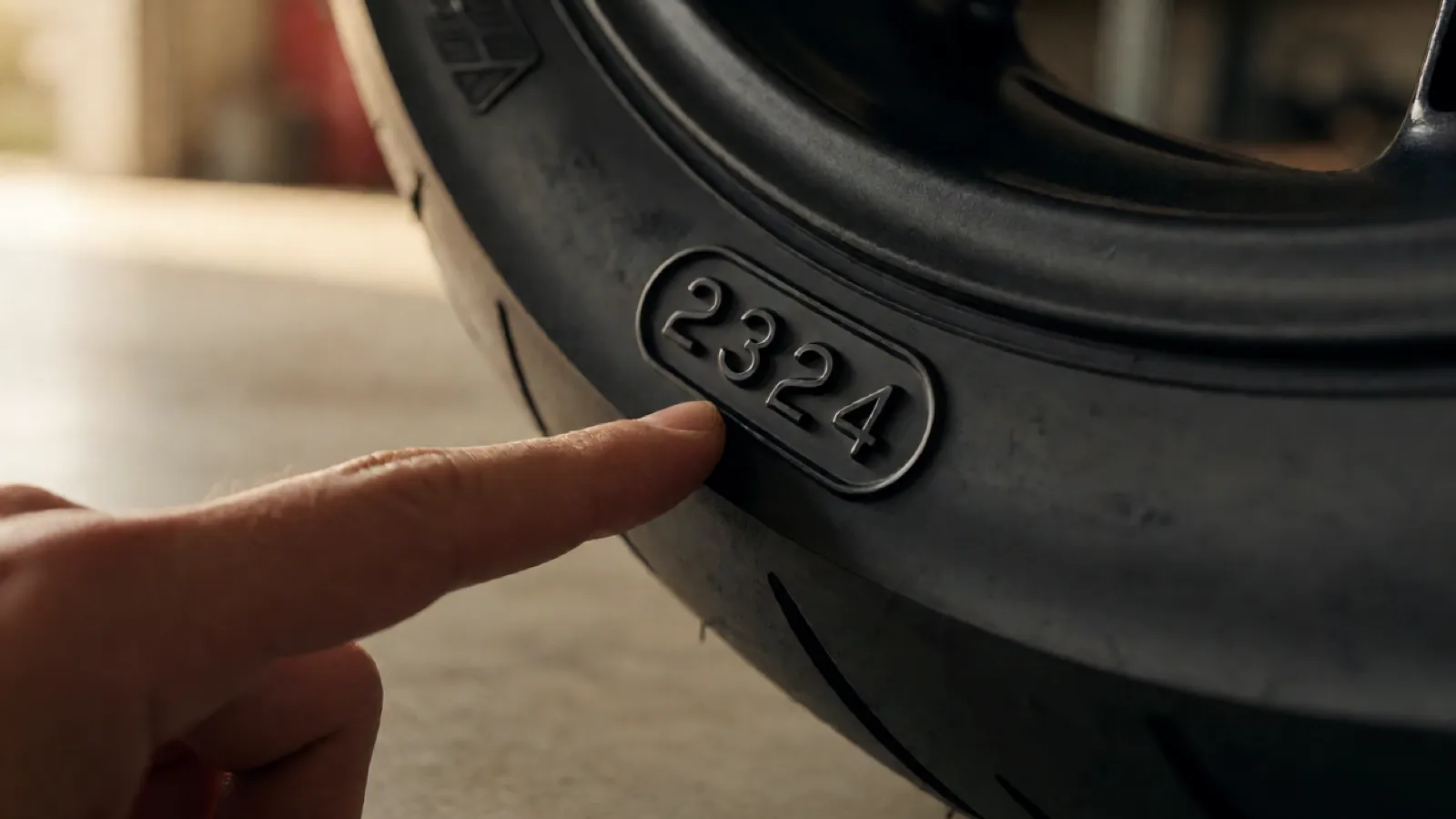
Find the DOT code on the sidewall. The last group is four digits: the first two are the week, the last two are the year. So "2324" means the 23rd week of 2024. That format is set by US federal rule 49 CFR 574.5. If you can't find it, look on the other sidewall. See also: how to read a motorcycle tire sidewall.
How Old Is Too Old for Motorcycle Tires?
There are two separate questions here.
How old should a tire be when you buy it? There's no official cutoff. Some riders simply ask for the most recent production date the shop has. That's a reasonable request, not a rule.
How long can a tire stay in service? That's up to each tire maker. Michelin's motorcycle tire page, for example, says that after 5 years of use a tire should be checked every year by a professional, and any tire still on the bike 10 years after its manufacture date should be replaced, even if the tread looks fine. Other brands may say something different, so check yours. The age is counted from the date code, not from when you bought or fitted the tire. See also: how often to change motorcycle tires.
Buying online? Ask the seller for the production date first.
2. Inspect the Tire Before and After Mounting
Most new tires are fine out of the box, but owners do report the odd one that isn't: tires that won't balance, tires that are out of round, even something loose inside the casing.
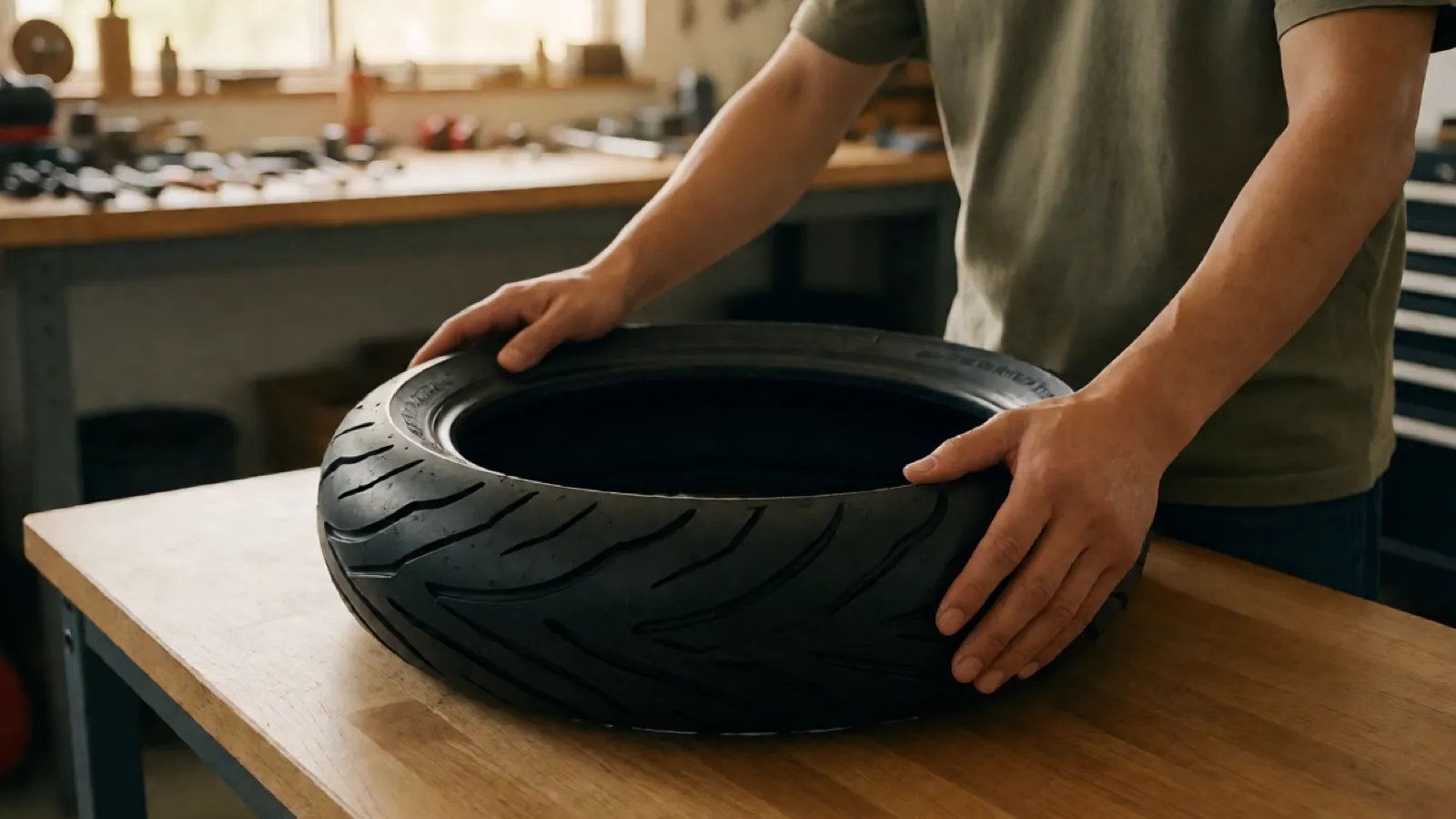
Before mounting, look and feel:
- Inside the casing, for anything that shouldn't be there
- Along the tread and both sidewalls, for bumps, bulges or cuts
- Around the bead, which should be clean and undamaged
After mounting, get it balanced and watch the wheel spin. If it won't balance, or there's a vibration that wasn't there before, don't wait for it to "settle in." Take it back while the problem is still easy to show.
3. Pick for How You Actually Ride
A lot of bad tire choices come from buying for the riding you'd like to do instead of the riding you actually do.
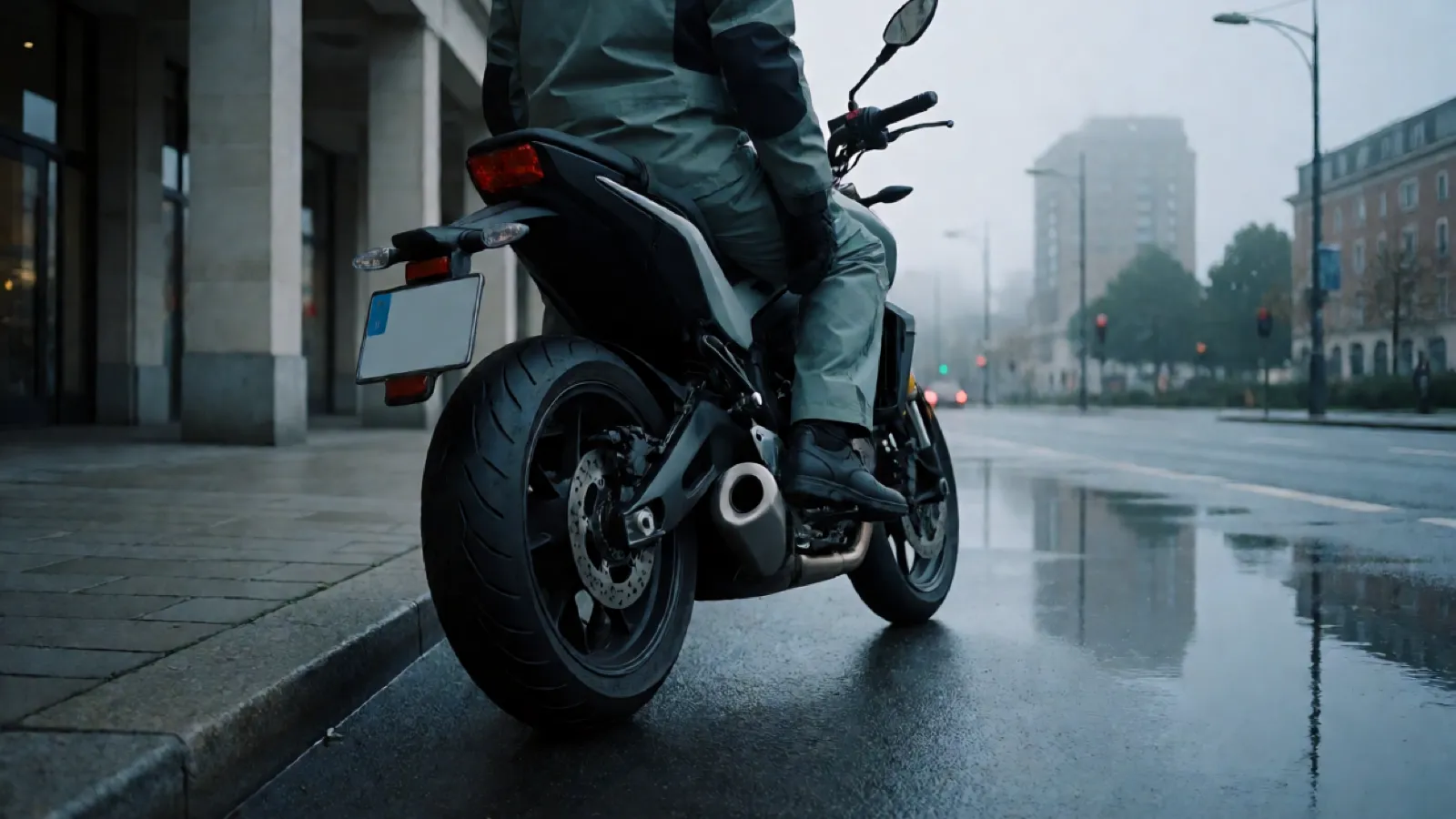
Wet and cold grip. If you commute, ride year-round or live somewhere it rains a lot, wet grip matters more than track-day grip. Some owners say they lost confidence in the wet on tires that were fine when dry, and a common complaint about sportier compounds is that they take a long time to warm up on cold, damp roads. If most of your riding is a cold, damp commute, pick for that, not for the odd sunny weekend.
The 50/50 question. Plenty of tires are sold as 50/50 or all-purpose, and owner feedback on them often sounds the same: a bit vague on the road, not much bite in the dirt. A 50/50 tire is a compromise between two surfaces. If nearly all your miles are on pavement, buy a road-biased tire.
Highway manners. Big knobby tires have side effects. Riders often report loud tire hum at highway speed, and some report head shake with aggressive dual-sport tires, especially with luggage or in a crosswind.
4. Know What Normal Wear Looks Like
Some owners report original-equipment tires, the ones a new bike ships with, wearing out far sooner than expected. So the tire your bike came with isn't necessarily the one to judge every replacement against.
Uneven wear is the other thing to watch. On the front tire this often shows up as cupping, also called scalloping: the tread blocks wear high-low-high-low like a saw blade. Cruiser owners report it most, and riders say it brings noise, vibration and a vague feeling in corners.
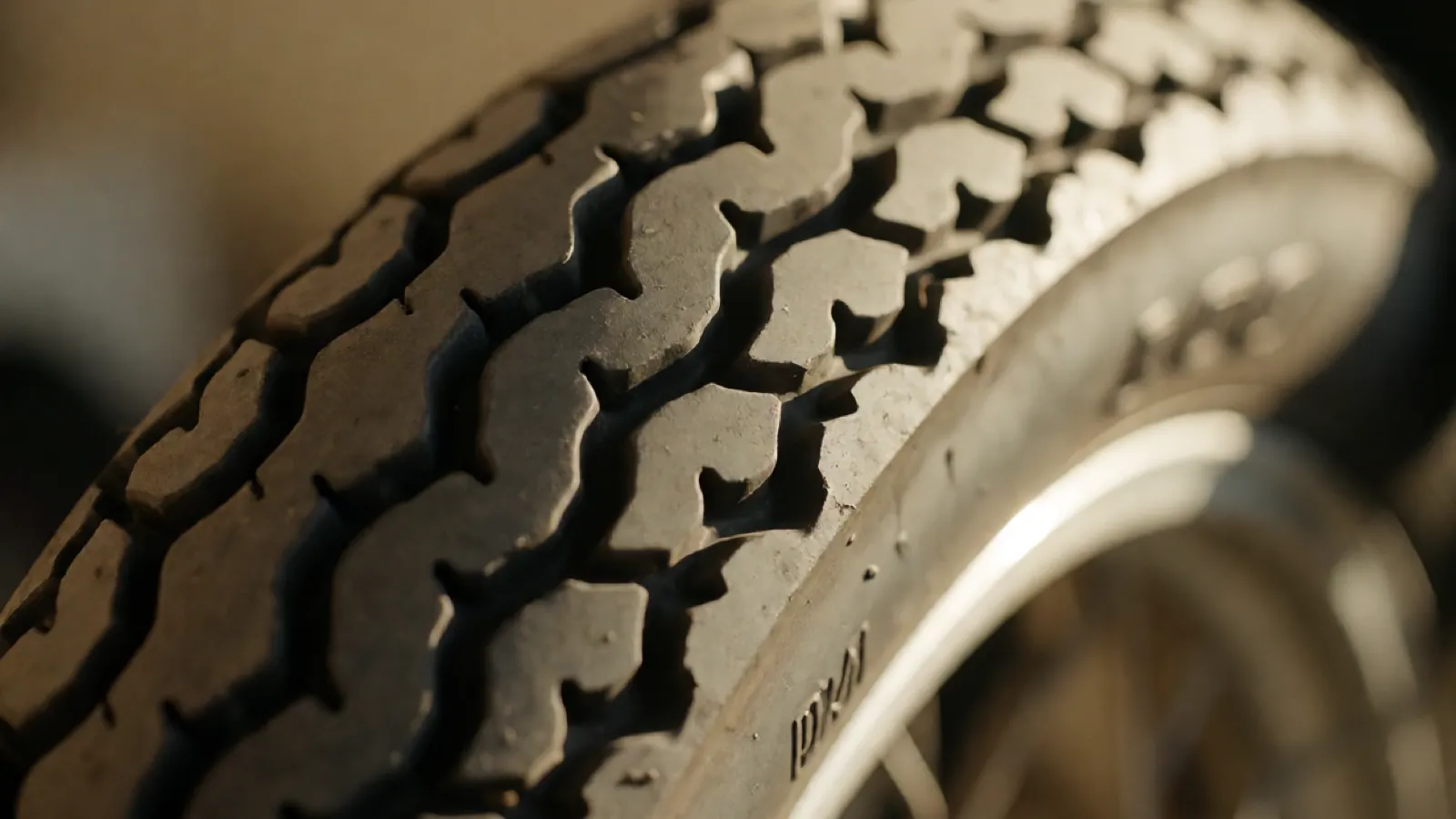
Run your hand across the front tread every few weeks. If it feels like a saw blade in one direction, check your pressures against the motorcycle tire pressure guide and have the suspension looked at. See also: motorcycle tire wear patterns.
5. Know the Warning Signs of Tread Separation
Tread separation is rare, but it's the failure you least want to miss.
It happens when the tread starts to come away from the casing underneath. Sometimes it shows up first as a bulge. In the worst cases owners report the tread coming off at speed, which can mean a loss of control and damage to the bike.
Two things help.
Before you buy, check for recalls on that tire. In the US that's NHTSA's recall search; other countries have their own safety regulator, and tire makers usually list recalls on their own sites too.
Once the tire is on the bike, know the warning signs:
- A new vibration or wobble that wasn't there before
- A bulge you can see or feel on the tread or sidewall
- Cracks, cuts or anything odd along the tread or sidewall
- A thumping noise that changes with speed
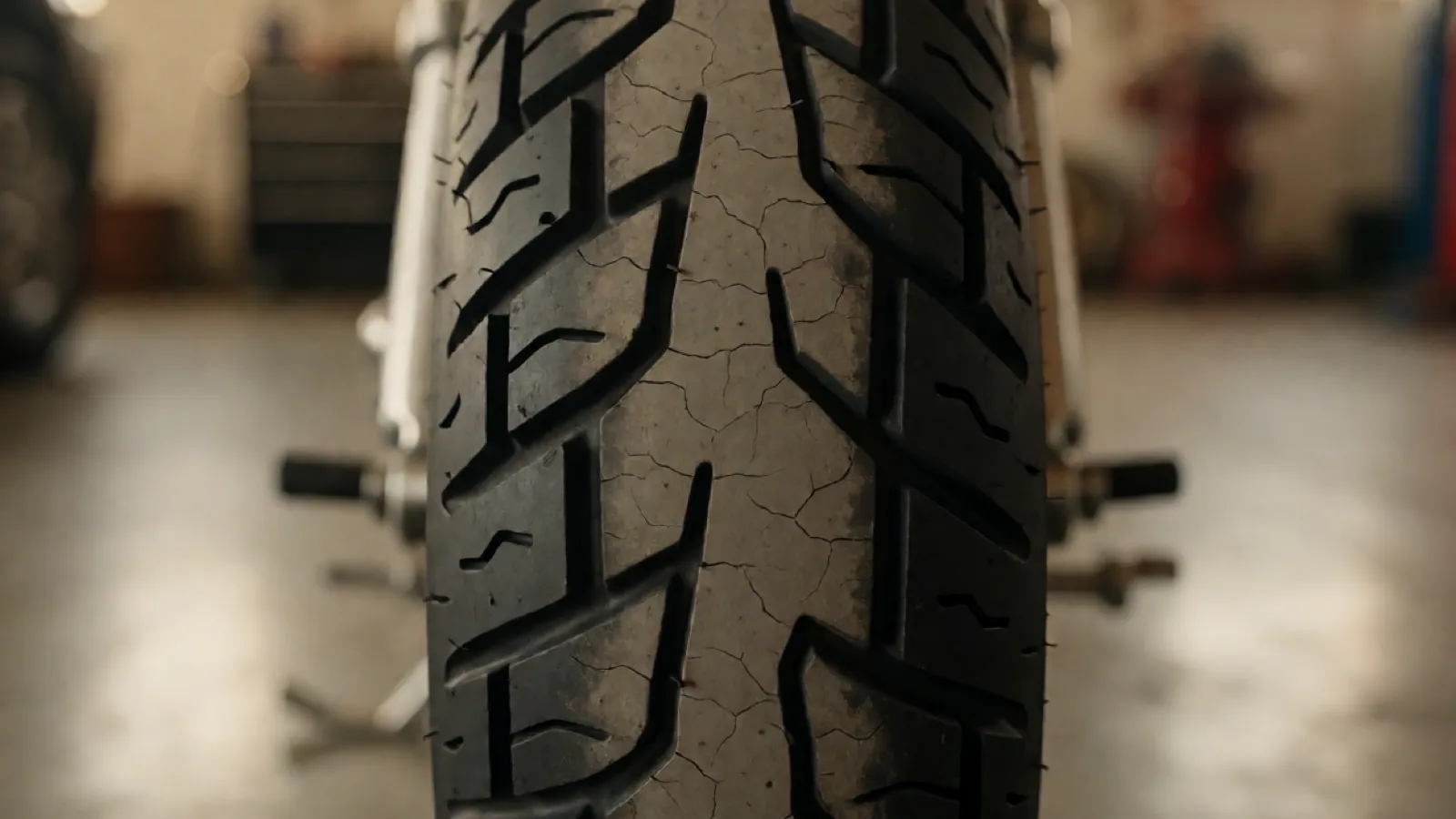
If you notice any of these, stop and get the tire looked at. Don't ride it home at highway speed.
6. Sort Out the Install Before You Order
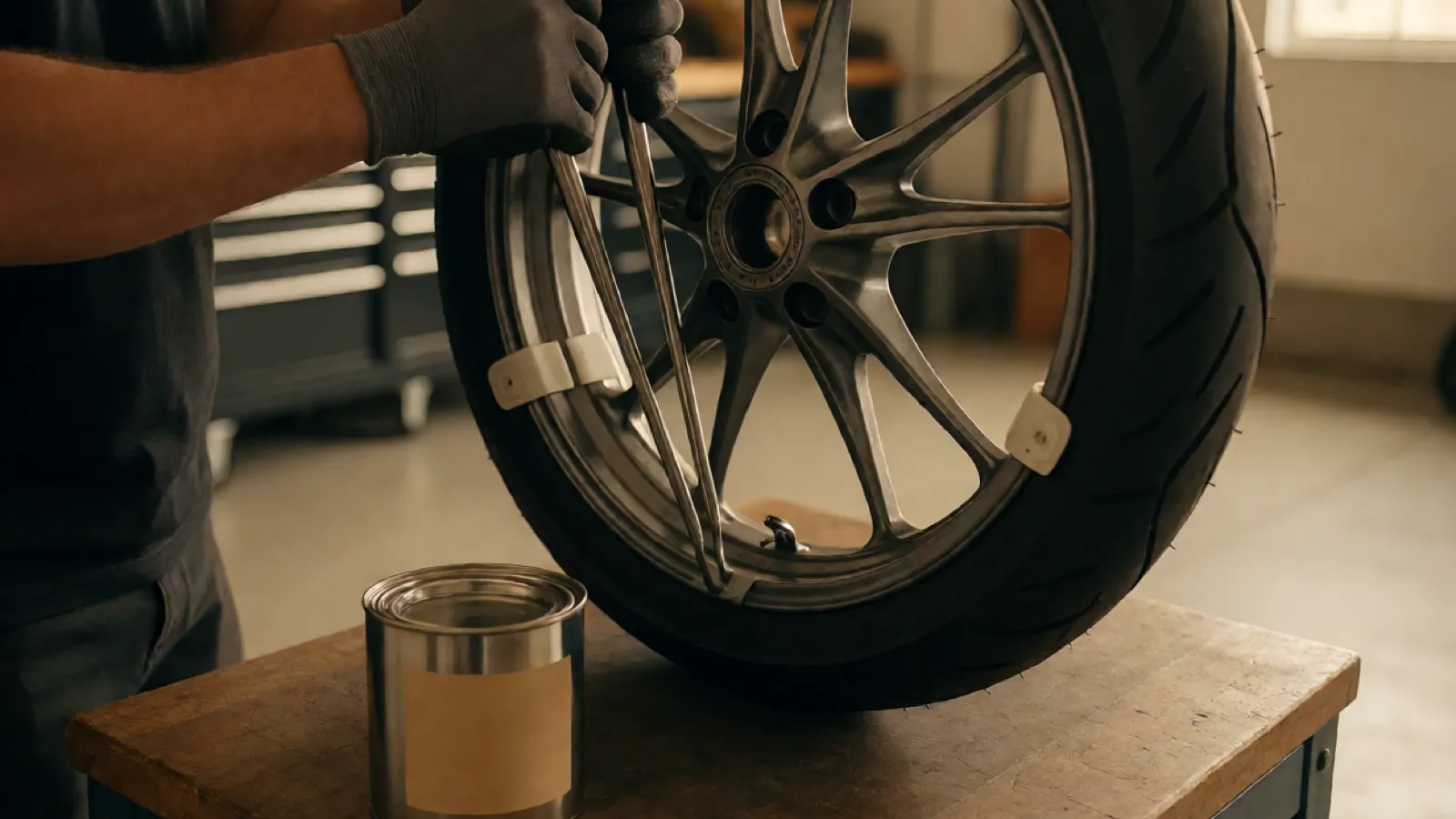
If a shop is fitting it: prices vary a lot from shop to shop, so call around and ask what the quote includes: mounting, balancing, disposal of the old tire, and whether they want the wheel off the bike or the whole bike. Owners have also reported rims getting scratched during a tire change, so take a few photos of your wheels before you drop the bike off.
If you're doing it yourself: some tires, especially ones with stiff sidewalls, are very hard to fit with hand tools, and owners have reported damaging the bead while forcing them on. Follow the tire maker's and the rim maker's mounting instructions, including their limits on how much pressure to use when seating the bead. Don't go by a number someone posted online. See also: how to replace a motorcycle tire at home.
Motorcycle Tire Losing Air at the Bead
If a freshly mounted tire keeps losing a little air every day and you can't find a puncture, the bead may not be sealing. Two causes come up again and again in owner reports: a dirty rim sealing surface, and using ordinary grease instead of proper tire mounting lube. Clean the rim, use the right lube, reseat it and check again.
If Your Bike Runs Inner Tubes
Lots of dirt and dual-sport bikes still use tubes. A few points from common owner complaints:
- A torn-off valve stem is one of the most common ways tubes fail off-road. At low pressure the tire can slip on the rim, drag the tube with it and tear the valve out. A rim lock in good condition helps prevent this.
- Dust the tube and the inside of the tire with talc so the tube can move freely.
- Put a little air in the tube before mounting so it holds its shape and is less likely to get pinched by a tire iron.
- Don't judge a tube by its "heavy duty" label alone. Buy from a seller who lists the actual specs.
7. Buy From Someone Who'll Back It Up
When a tire turns out to be faulty, getting it sorted can be hard work. Common complaints from owners: the brand and the dealer each send you to the other, or you're told tires are consumables and not covered.
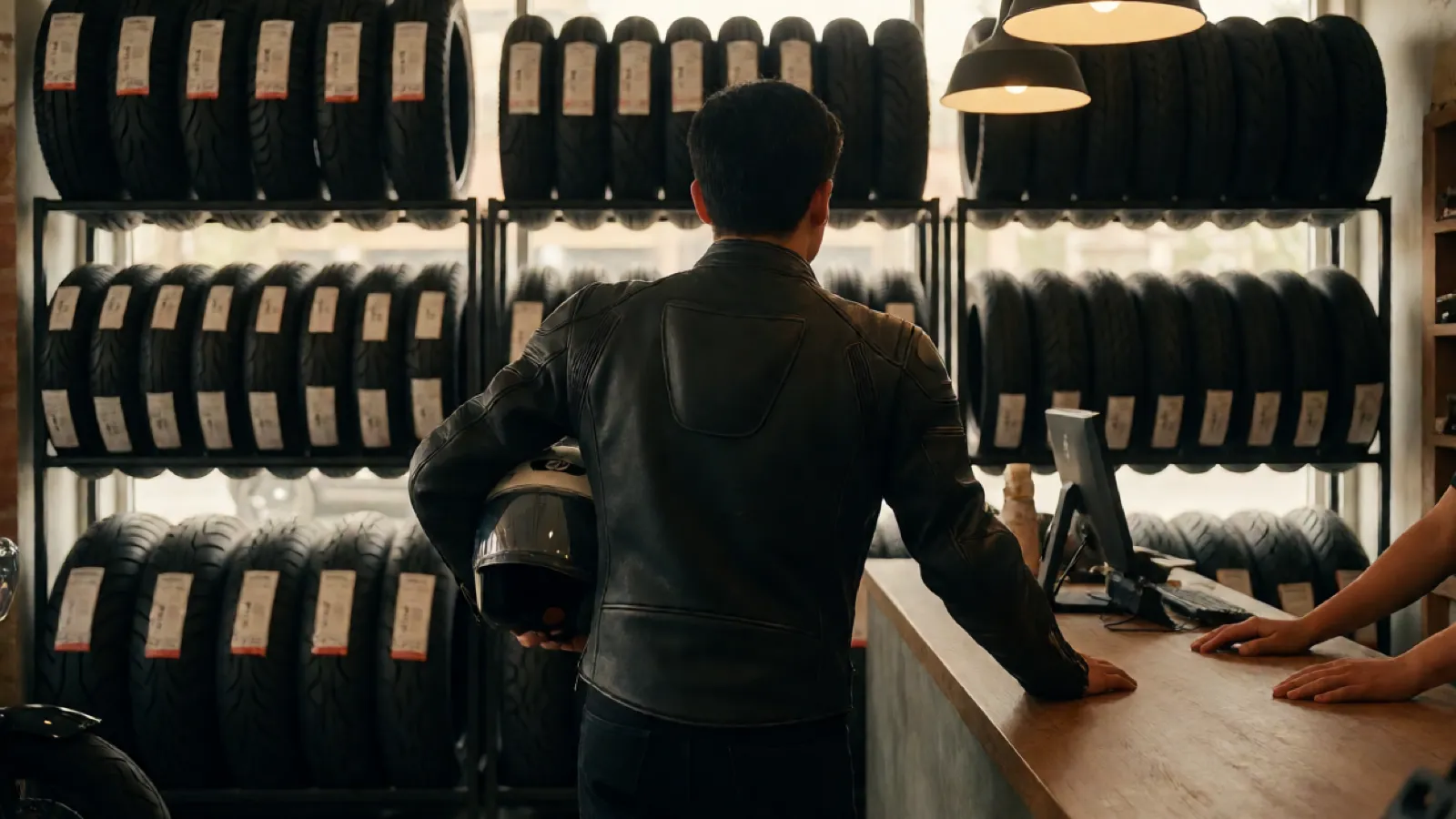
Marketplace buyers also report wrong sizes, tires that looked used, and sellers who won't pay return shipping.
It's usually worth paying a little more to buy from a dealer or an established shop with a clear return policy. Keep the receipt, a photo of the date code and a note of the day the tire was fitted. If something goes wrong, you'll need all three.
For anything specific to your bike or your tire, go by the tire maker, your owner's manual and a qualified tire technician.
FAQ
How do I read a motorcycle tire date code?
Look for the DOT code on the sidewall and find the last four digits. The first two are the week of manufacture and the last two are the year, so 2324 means the 23rd week of 2024. This format comes from US rule 49 CFR 574.5. If you can't spot it, check the other sidewall.
How old is too old for motorcycle tires?
There's no single legal age limit. Each tire maker sets its own guidance, so check yours. Michelin, for example, recommends a yearly professional inspection once a tire has been in use for 5 years, and replacement 10 years after the manufacture date, whatever the tread looks like. Count from the date code, not the purchase date.
Why are my motorcycle tires wearing out so fast?
Start with the basics: check the pressure, how much load you carry, the suspension setup and the shape of the wear. Low pressure, heavy loads and worn suspension all speed up wear. If those are fine and the wear is still unusually fast or uneven, get a tire shop to check whether the tire itself could be at fault.
Cupping on the front tire, where the tread feels like a saw blade, is often linked to pressure or suspension.
Why is my motorcycle tire losing air at the bead?
On a newly mounted tire, a slow leak with no puncture usually means the bead isn't sealing against the rim. The usual causes are a dirty or corroded rim sealing surface, or ordinary grease used instead of tire mounting lube. Clean the rim, use proper lube and reseat the bead. On a tubed wheel, also check around the valve stem.
What are the warning signs of tread separation?
Watch for a new vibration or wobble, a bulge on the tread or sidewall, cracks or cuts in the tread or sidewall, and a thumping noise that changes with speed. Any of these means stop riding and have the tire inspected by a professional. Before buying, check whether that tire is under a recall.
The Short Version
Get the size and ratings right, then work through the seven checks. Next time you're in the garage, find the date code on both tires you're running now.